Ramadan in Egypt, Pt 2

Sitting down to write this while Ramadan is still going on. In fact, this week is a holiday triple-header: Today, Sunday, April 16, is Coptic Easter. Tomorrow is Sham Al-Naseem, the traditional Egyptian spring festival, and Thursday is the first day of Eid al-Fitr, the “feast of the breaking of the fast” which ends Ramadan.

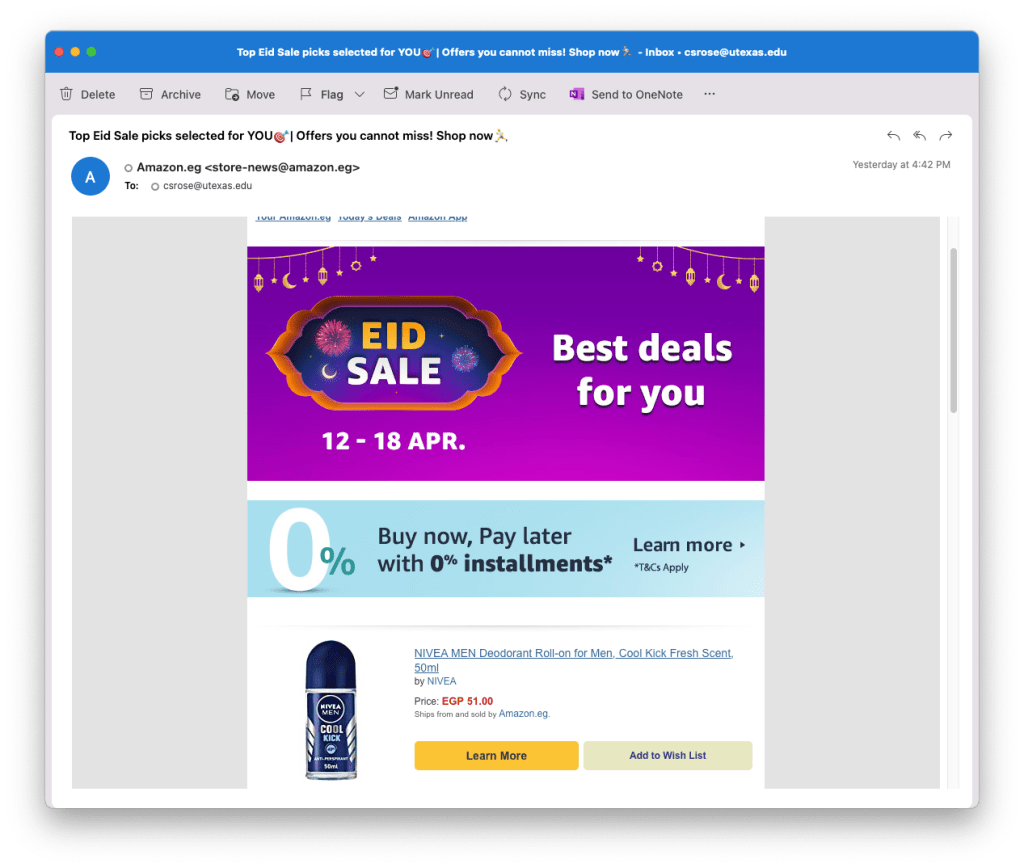
There’s no way to ignore Eid. Look at these ads I got from Amazon:
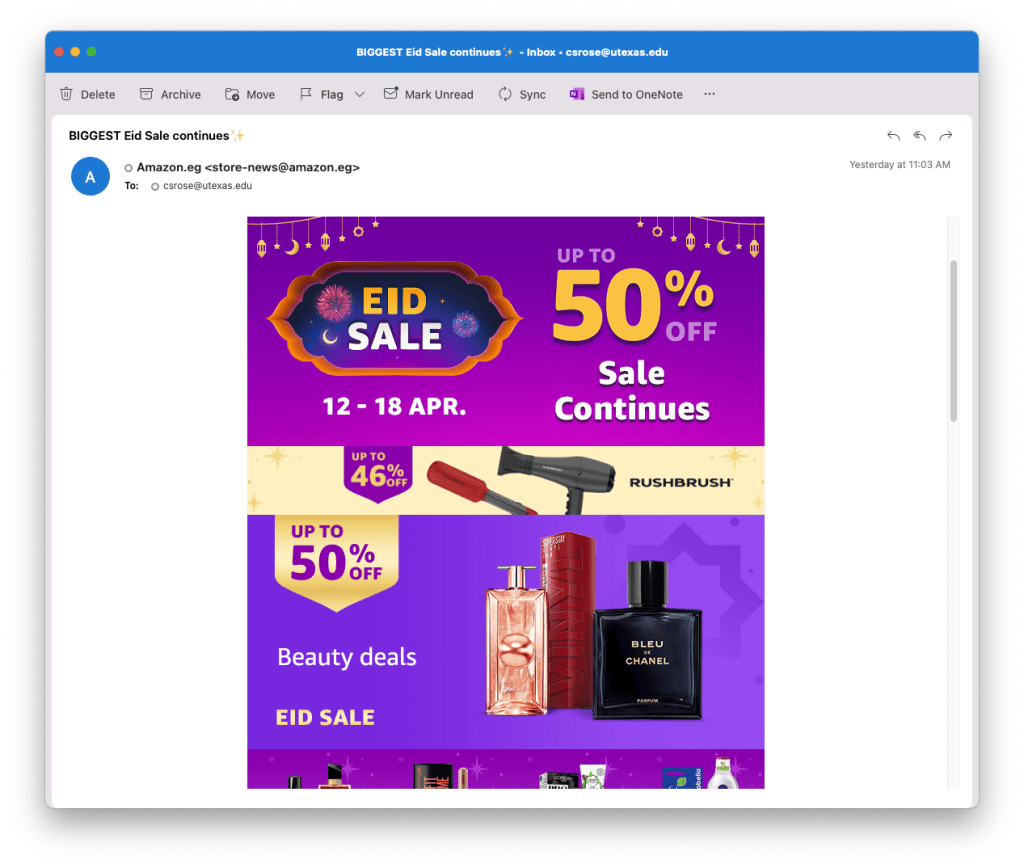
I’m trying really hard not to read anything into Amazon suggesting that what I need for Eid is a case of deodorant (they also think I need Tide detergent and a jumbo pack of diapers).

So, let’s get into it shall we?

Are there Ramadan decorations like there are Christmas decorations?

Yes…and how!

One of the things you hear over and over in Egypt is that Ramadan is different here than anywhere else in the Islamic world (I have nothing to compare this to, so maybe they say this everywhere else, too).

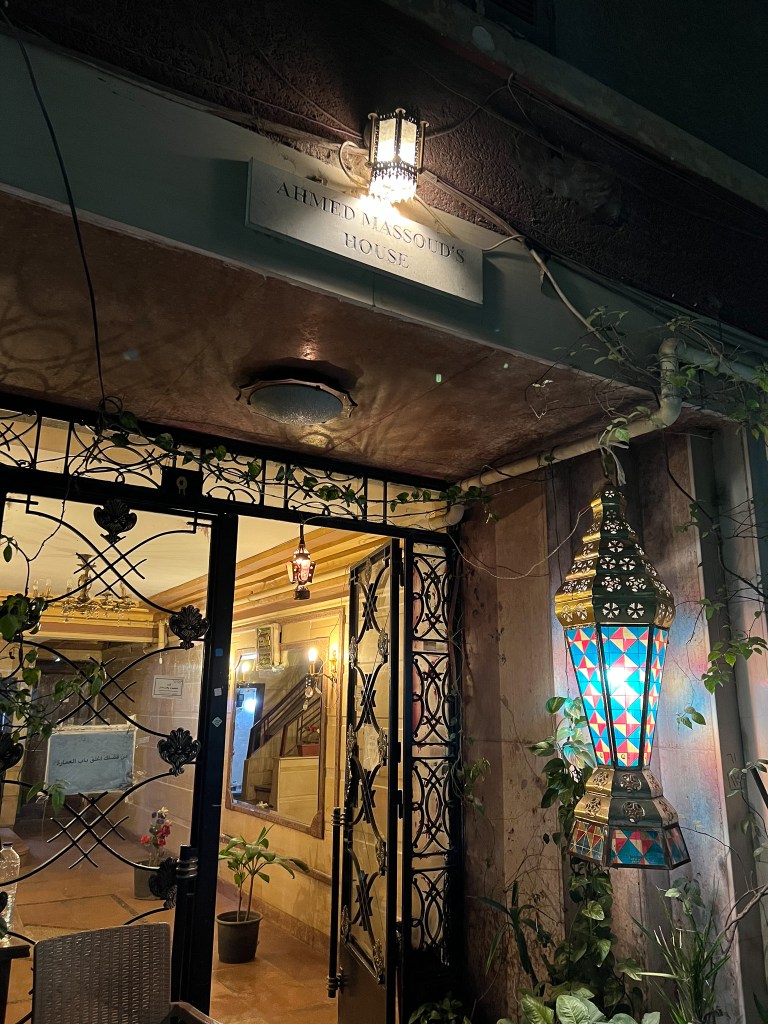
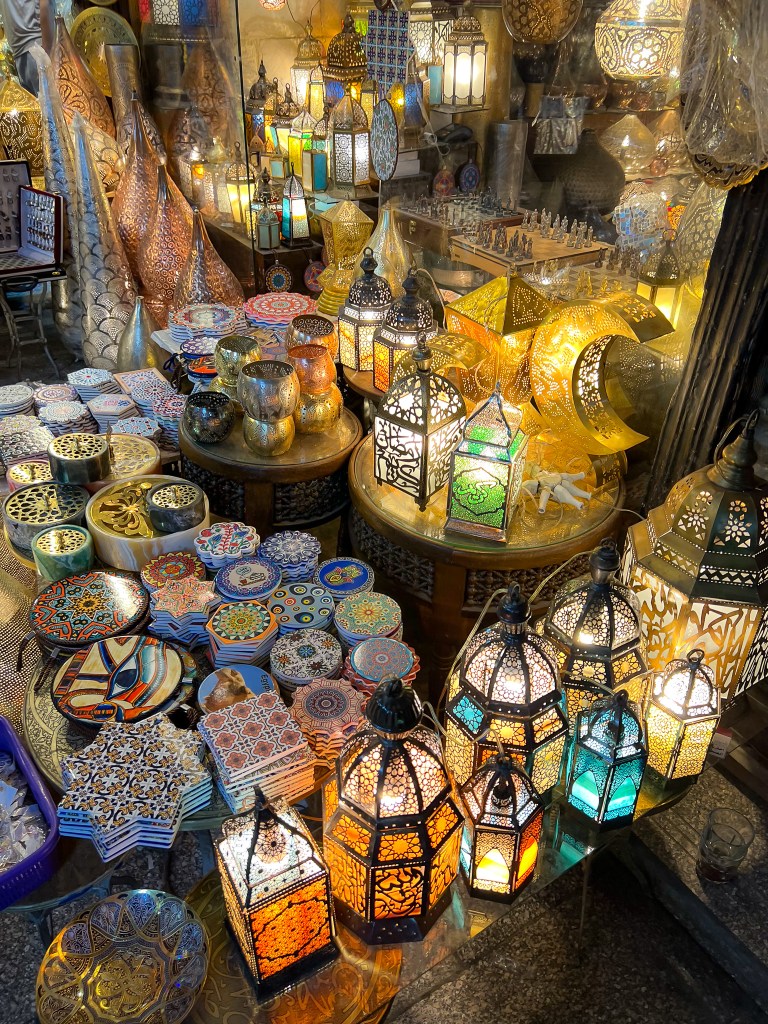
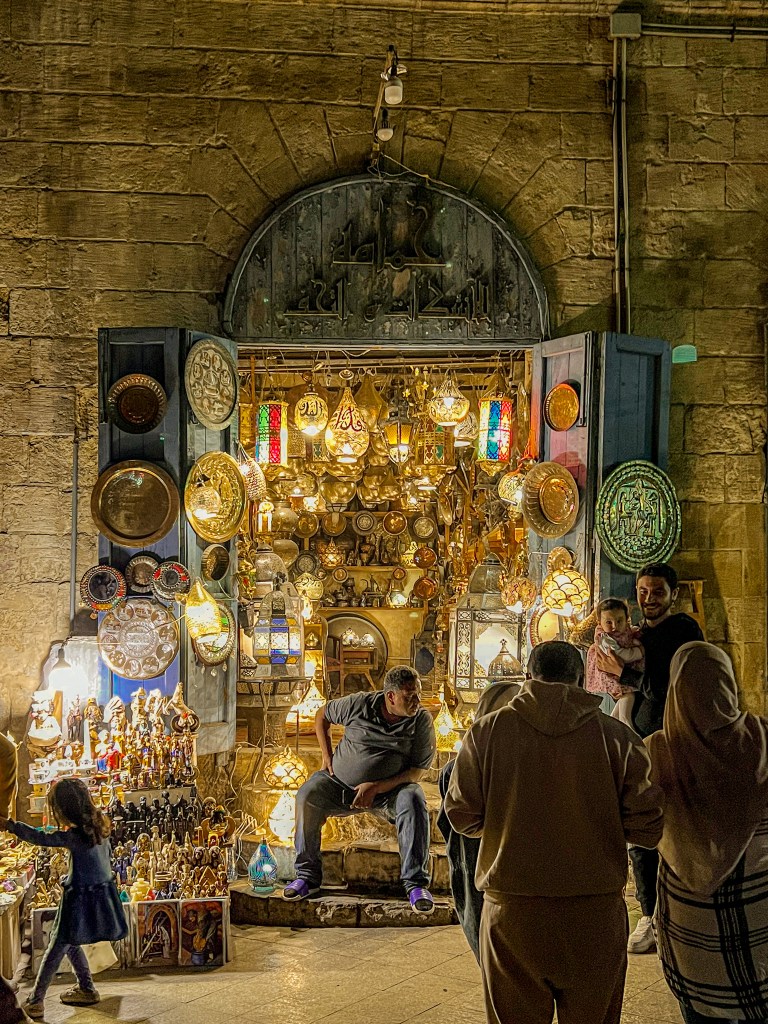
One of the unique things here is that, as Christmas decorations revolve around various permutations of pine trees (Christmas trees, wreathes, etc.), in Egypt decorating for Ramadan revolves around the fannous, or lantern.

In fact, there are more than a few decorations combining the fannous of Ramadan and the candle associated with the Easter vigil — in Orthodox Christianity the big Easter service is very late on Saturday night; churches descend into total darkness, and then at midnight candles are lit to symbolize the resurrection of Jesus. Traditionally it’s supposed to be a “miraculous flame” but the last time I went to one you could hear them trying to get the lighter to work.

You can find actual lanterns and things that approximate lanterns everywhere, although the best selection is in the area known as Taht al-Rabaa’, in the old city of Cairo between Port Said Street and Bab Zuwayla, and then continuing into the tentmaker’s market, Khan al-Khayamiyya.

How does life change during Ramadan?

I’ll be honest – the first day of Ramadan I really wasn’t sure what to make of things.

26th of July Street in Zamalek at 6 pm on the 1st of Ramadan. This street is normally chaos personified with bumper-to-bumper traffic.
Lots of decorations, but where’s the party??

So, to answer the question: how does life change? Not much happens between, say, 2 pm and sunset (which right now is around 6 pm — Egypt is doing Daylight Saving Time this year for the first time in seven years, but they decided to push the start back until after Ramadan ends).

The collection I’ve been working in closes at 1:30 and there’s another rush hour as most government offices seem to let non-essential personnel go home around then. Most smaller stores close around 3 so that people can go home to prepare for Iftar (breakfast, which, literally, combines the two words “break” and “fast”).

Then, around 8, things open back up again until 2 am (which is when the government decided things need to close down). Then there’s another meal (suhoor) before fasting starts again for the dawn prayer (fajr), which this morning was at 3:57 am; many people then read the Qur’an (it’s tradition to read/recite the entire text over the course of Ramadan, and during the month Anghami — which is the Middle Eastern version of Spotify — has popular reciters and the section of the scripture for that day ready to go).

So, yes, many people do, in fact, stay up all night and then sleep in the afternoon – I’ve been told this is an Egyptian thing but it seems kind of like it would apply everywhere else, too.

This generally means that by midafternoon, there’s a notable energy lag, which is why not a lot happens after about 2 pm.

The third week of Ramadan is the longest. Even as a non-fasting non-Muslim in Egypt, I have noticed this. The first week people are getting into it, the second week people are in the groove. The third week … is long. The fourth week, everyone’s ready for Eid! Hope you made your plane/train/hotel reservations months ago — everyone travels, and I’m kind of looking forward to having Cairo to myself … or as much as one can in a city of 22 million people.

Ramadan food!

I often tell students (and other groups that I work with) that, while the first comparison that most people make is between Ramadan and Lent, there’s a case to be made that it’s really to Christmas. It’s when people see family, everyone gets together, and there’s. so. much. food. I’ve been to a couple of Iftars and walked out staggering beneath the weight of my own bloat every time. Even when you think you’re done eating, someone will come along and inform you that you’re not.

and so. many. desserts.

Every family has their own traditions. I can’t even start to generalize. Google “Ramadan recipes.”

In Egypt the quintessential Eid dessert is “Kahk al Eid” (or “Eid Cake”). Currently there are signs everywhere for them – and, yes, you can get them from Amazon (although why would you want to??).

It’s alive!

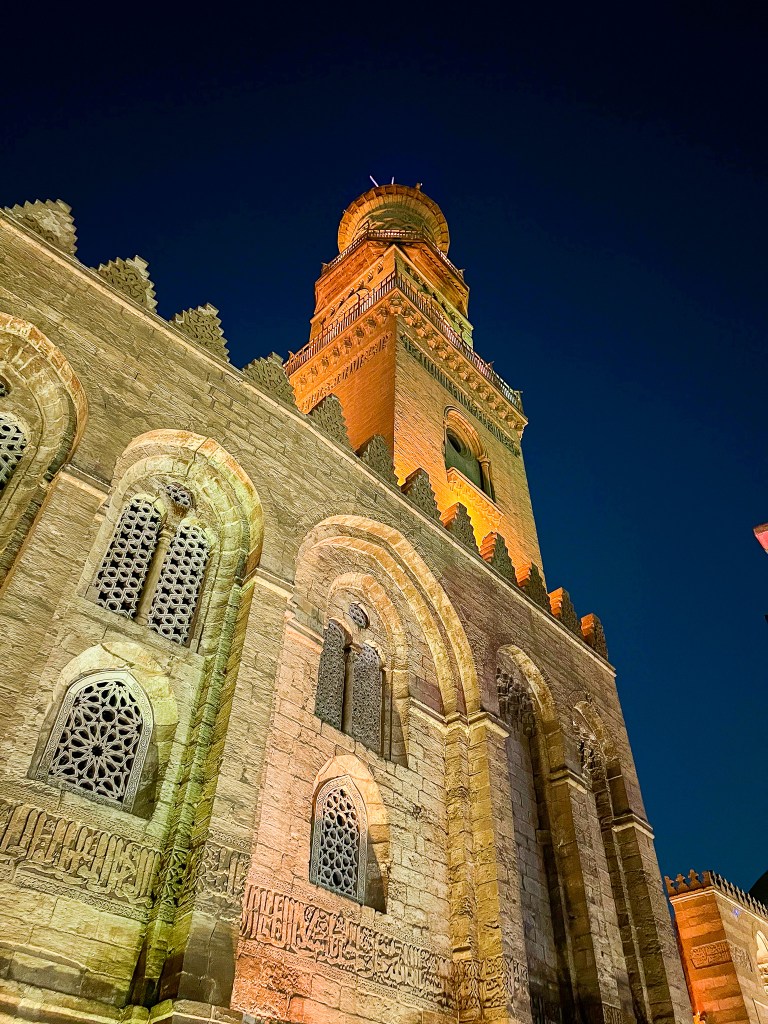
So, a couple of weeks ago I did a photowalk in the Old City at night to see all the Ramadan doings (a photowalk is where a group gets together and wanders around and takes pictures of things). I had been told that if you want to see the “real” Ramadan in Egypt, that’s where to go.

It was noisy. It was crowded. It was on the warm side. And it was incredible.

And just to get a feel for how it was to be there…

There are, of course, many other aspects of Ramadan I didn’t address here, but this has been my experience — so far. If things get wild during Eid, there might even be a part 3!

Also, for the educators out there, my videos are Creative Commons licensed!

Ramadan in Egypt, Pt. 1

It’s been a while since I’ve posted widely; apologies for that. Other than a visit from spouse in which we traveled all over Egypt for two weeks, my life in Cairo has been somewhat routine, with me on a schedule of home –> research –> home –> Arabic class –> home.

In other words, living the dream.

However, I am spending my first Ramadan in Egypt and wanted to spend some time describing what it’s like.

The Basics

What is Ramadan? I’m so glad you asked!

Ramadan is the ninth month of the Islamic calendar (sometimes referred to as the hijri calendar, as it has the prophet Muhammad’s flight–hijra–from Mecca to Medina in 620 as its beginning point, and often abbreviated AH or simply H).

Hijri dates are not fixed in place; the Islamic calendar is a lunar calendar, ten days shorter than the Gregorian calendar (and without leap years), so over the course of a 36 year cycle Ramadan (and the rest of the Islamic holidays) occur ten days earlier every year and wind up back where they started.

This year (2023), Ramadan began in Egypt at sunset on March 22 and will end at sunset on April 20. Dates can shift depending on geographic location because the month begins and ends with the sighting of the new moon.

Ramadan is the holiest month in the Islamic calendar; according to Qur’an 2:185, the prophet Muhammad received the first verse of the Qur’an during Ramadan (known as Laylat al-Qadr, or the night of power, although there is disagreement between the various madhhabs and sects as to exactly which night of the month that is).

Most people are aware that Ramadan is observed by fasting during the daytime: no eating, no drinking (no, not even water), no smoking, no sexual activity. No bad thoughts is also supposed to be on this list, but I’m not sure how that works in combination with the other four (I get cranky without food and am mystified by people who “just forget to eat.”).

“But what if …”

So, since I’m envisioning this post as something of an educational resource, let me acknowledge some familiarity with the ability of students in middle school (and undergraduates) to come up with infinite hypothetical questions and scenarios with which to bombard teachers.

“What if you’re on a spaceship and the sun sets every 90 minutes…” for example (answer: Mission Control usually follows a set time–with NASA it’s Houston time–so you’d just follow that. There have been religious opinions (fatwas) issued to address living in areas where the sun doesn’t really set in the summer — if I recall the most recent one was that Muslims who live in, say, Norway can fast according to the schedule in Mecca, which is much closer to the equator.)

But, in my experience, the answer to the basic question at the heart of most of questions is this:

If fasting is going to harm you, you’re not supposed to do it. Fasting is supposed to be an act of faith, not an act of self-harm.

So, for example, people who don’t have to fast include:

  • children who are too young to fast
  • women who are pregnant or menstruating
  • the elderly
  • anyone with a medical condition that is incompatible with or would be made worse by fasting (diabetics, people who have medication that must be taken on a regular schedule with food, etc.)
  • someone who is literally starving to death
  • travelers are also on this list, although some people exploit this loophole; for a long time it was not uncommon for unscrupulous wealthy folk from other parts of the Middle East to rent out a hotel suite in Cairo for the month so they could claim they were “traveling.” This doesn’t seem to be a thing anymore, although maybe most of them are going to Dubai or Beirut these days.

In Egypt, for example, most restaurants that are open during the day during Ramadan put up curtains or screens or something to allow people to eat with privacy (and to avoid rubbing it in the face of those who are fasting), but it’s not like you’re wandering around a desert with no hope of finding anything to eat. Supermarkets are open normal hours, and cafes may not be as full as usual but they still have customers. There are plenty of tourists, foreign residents, and, in addition to the above, 15% of Egypt’s population of 100+ million is Christian — mind you, the Copts have their own fasting regime for Lent

It’s really no one’s business if you’re not fasting:

Enough with the food already!

However, all of this emphasis on fasting, especially in, say, American school textbooks, tends to give a pretty dour impression of what Ramadan is all about.

For example, this ad for the South African peri-peri chicken franchise Nando’s shows a young man eagerly waiting for sunset (it looks like it was filmed in Dubai).

The Nando’s advert was notable because, given the realization among companies in majority non-Muslim nations that Muslim families tend to have buying power, there’s been some well intentioned (as in, the stuff the road to Hell is paved with) efforts to try to be more inclusive in advertising, especially in the past few years.

The Nando’s ad is one of the better ones–I have definitely seen people sitting at tables waiting out the last few minutes before breaking the fast, although usually it’s done with soup and a date.

However, some of the American entries this year were a bit cringe, such as this ad (with commentary from the friend who posted it on Instagram):

Oh my. Where to start with this one?

  • That’s not the hand gesture Muslims make while praying … and normal prayer isn’t done at the table like that either.
  • It appears to be the middle of the day.
  • If it’s just mom, dad, and kid, she probably wouldn’t have her hijab on.
  • And what in the world is on top of their plates?

A for effort, D for delivery.

For the record, the reason for all the hype is that said companies have caught on to the fact that there are other parts of Ramadan. There is lots (and lots, and lots) of food. And, even more notably, Eid al Fitr, which comes at the end of the month, is one of the main gift-giving holidays on the Islamic calendar.

Today’s home page of Amazon Egypt, for example, looks like this:

When Ramadan began … and I do mean, at the exact minute Ramadan began … I got at least 15 texts and notifications from various shopping apps wishing me a blessed month and sending a promotional code. Including one of the beer and wine delivery services (which I realized much, much later was actually a subtle note saying they’d see us when the month was over).

So … what does Ramadan look like?

This post is getting a bit long, so I’ll stop with the basics. In the next installment, I’ll share what it’s been like in Cairo this month!

Read now!

Interlude

Sorry I haven’t posted recently — I finally took my graduation trip, and now it’s conference season.

So, here are some pretty photos from Japan:

And if you’re at the MESA conference this weekend, come say hi!

The Curious Case of the Thomas Cook Hospital in Luxor

Over the weekend, the Thomas Cook company went bankrupt and shuttered operations, leaving hundreds of thousands of people stranded worldwide and searching for flights home.

A number of us Twitterstorians became particularly concerned about the impending demise of the company a few days ago when Ziad Morsy, a martime archaeologist and Ph.D. candidate at the University of Southampton tweeted that Thomas Cook’s historical archivist had lost his job.

The Thomas Cook company was 178 years old when it collapsed (just over a month before Britain may or may not exit the European Union–coincidences which have been commented upon elsewhere). Some of its history in relation to British imperial history was covered by another colleague in a Twitter thread yesterday:

Inasmuch as it’s easy to point to the Thomas Cook Company’s early days as those of a commercial company essentially making money off of the expansion of the British Empire, there are occasional glimpses at a richer and more complicated role for the company in various contexts (@afzaque covers several of them in his thread, which is worth a read).

It’s these sorts of things that make the potential loss of the company’s archive particularly painful, as it is one of those out-of-the-box sources for material that can shed startling new light on historical periods.

And hence, I present …

The curious case of the Thomas Cook Hospital

I ran across the hospital while writing the first two chapters of my dissertation, which wound up comprising a comprehensive history of public health in Egypt between 1805 and 1914 as one did not already exist. (Wanna publish it? It’s not going to be in the monograph.)

4472016022_01761fe8b9_z.jpg
The West Bank of the Nile, opposite Luxor, in 2010.

It was located in Luxor, a settlement that is notable mostly for what people were doing there thousands of years ago, as it is built on top of the ruins of what was almost certainly not known to its inhabitants as Thebes, but was one of the New Kingdom capitals of ancient Egypt. Across the Nile River, wide and lazily flowing at this point, is the pyramid-shaped hill that marks the location of the Valley of the Kings.

Given the numerous pharaonic sites that dot the landscape up and down the river from Luxor, Cook had the bright idea to utilize boat travel for wealthy tourists to visit them without the hassle of having to move constantly to new hotels every night. Luxor, at the epicenter, was the site of the train station from which Wagon-Lits and other operators operated sleeper trains to Cairo.

In 1890, Luxor was a small town — perhaps five thousand permanent inhabitants, which could swell as high as twenty thousand during tourist season when there was work to be had.

John Mason Cook–the son referred to in the company’s official name “Thomas Cook & Son” after 1865 — had the idea to open a hospital as early as 1887:

In 1887, he decided, driven by the reactions of rich foreigners–British, American, German–in the face of the unfortunate hygienic conditions of the local population, to construct a hospital. “Accomplished in 1891, inaugurated by the Khedive Tewfik Pacha, it comprised 26 beds (of which 8 were for women, 10 for men)*, the buildings well constructed, each isolated from the other, in a healthy and fortuitous position.”

*(no, this doesn’t equal 26).

Jagailloux, Serge. La Médicalisation de l’Égypte Au XIXe Siècle. Synthèse 25. Paris: Éditions Recherche sur les civilsations, 1986. (translation mine).

The hospital was co-directed by a Syrian doctor and an Englishman (only the latter–a Dr. Saimders–is named). Given that neither were in residence in Luxor in the off season (April to November), a third doctor–an Egyptian–was appointed to see patients in the off-season.

It was estimated that over 120,000 patients were seen, with over 2,000 operational procedures performed, in its first twenty years of operation. The hospital was presumably built primarily for the treatment of visiting foreigners, with Egyptians working in the tourist industry as a secondary priority.

_One_of_the_dahabeahs_of_Thomas_Cook_&_Son,_(Egypt)_Ltd._.jpg
“One of the Dahabeahs (sic) of Thos. Cook & Son Company (Egypt)”
Berlin: Cosmos art publishing Co., 1893.
Collection of the Brooklyn Museum

What is interesting is that, with Cook’s blessing, the hospital was opened to the public as well. In 1898, The Lancet enthusiastically reported that people were coming from over two hundred miles away to seek treatment at the facility. (“Egypt.” The Lancet 152, no. 3905 (July 2, 1898): 59.)

After the British occupation in 1882, funding for public health flatlined. Under Lord Cromer, the public health budget never exceeded 100,000 Egyptian pounds (at the time LE 1 = £0.95).

Hospitals in the provinces, which were already run down and developing a bad reputation among patients (most of them had been built in the 1840s), were frequently closed or moved to other, newer buildings that were not purpose-built to serve as hospitals.

The construction of private facilities was encouraged by the Anglo-Egyptian government; the government would not open new hospitals or dispensaries (a combination pharmacy/clinic used to supplement hospitals in smaller settlements) in towns that had “good” private facilities. Many of the hospitals were funded by local European communities to serve their own–Austro-Hungarians, French, Greeks, Italians, and Anglo-Americans all had their own facilities in Cairo and/or Alexandria, most of which referred their Egyptian patients to government facilities.

Hence, it is a point of curiosity for me as to what inspired John Mason Cook to open his hospital to the general public, especially given that his company did not lack for wealthy clientele to fill its beds.

It suggests that, even at the height of imperialism, with a company that can (and has) be considered an agent of an imperial power, things are never quite as simple as they might seem.

As I was writing this, Ziad tweeted me this tantalizing entry from the archival catalog:

Hence, the answer to my questions may lie in this box, whose future is now in doubt.

What you can do to help

If you’re one of us history types who has benefitted, or could benefit, from consulting the Thomas Cook archives, this thread has specific action items you can take to let people know that there is interest in saving the archive and not letting its contents be dispersed or destroyed.

My Research “Year”

Full confession: this isn’t the next entry I planned for the Grad School Survival Guide, but I had a bit of writer’s block and decided to just jump around to the next subtopic that inspired me. I wasn’t sure whether I wanted to include this, but ultimately decided “what the hell.” Let me tell you about my research “year.”

I am a historian of Egypt, and I had planned to do most of my research in Egypt, maybe with a visit to the British National Archives (as I work on Egypt during the colonial period) and/or one or two collections in France. I applied for a Fulbright Scholars grant to spend 2016-17 doing research in Cairo, and was elated when, right at the end of the fall 2015 semester, I got word that my name had been forwarded to the Fulbright office in Cairo for approval.

So elated, in fact, that it didn’t occur to me to have a plan B.

Two months later, an Italian graduate student from Cambridge University named Giulio Regeni was found murdered in Cairo. Things moved very quickly from there. In mid-March, I got notice that the Fulbright program in Egypt was being canceled over security concerns. There was no consolation prize; no offer of funding if I decided to do research elsewhere–it was just gone.

I tried for a bit to figure out if I could somehow do research independently in Cairo when a friend delivered the bad news that the Egyptian National Archives hadn’t been granting research clearances to foreign scholars–she’d been there for six months and hadn’t gotten approval. Not only that, but she described the atmosphere in Egypt as “tense” and said that she’d pretty much kept to herself the entire time she was there.

This is when I realized that all of my Plans B had involved what to do if the Fulbright didn’t come through and I needed to figure out how else to fund research in Egypt. None of my Plans B involved the idea that Egypt would go offline entirely and that I would need to both come up with a funding plan and an alternate research site.

Emergency Plan B

London was a natural alternative work site: I knew there was material in the British National Archives as I’d been there before, so I began planning an independent, self-funded short (six-week) research trip for the fall of 2016. I also took a look at Geneva, where the League of Nations archives are housed (at the United Nations). I knew I wouldn’t need very long in Geneva–maybe a week or so.

My initial plan was to engage in a short trip up front and make a return trip–or additional trips–once I knew what I could gather in which place. I did this mainly because I had been planning for some time to step down from my full time job at the end of the year to facilitate research and writing, and I wanted to use up my vacation time — I figured if I wasn’t going to have a research stipend, I could at least still collect a paycheck while I was traveling. (I did have an insane amount of vacation time to use up.)

So, I used frequent flier miles to book a six week trip to London, and found a cheap ticket from London to Geneva sandwiched into the last ten days.

Do neither as I said nor did

IMG_5018
“We meet again, old foe.”

So, let me explain what I did wrong.

I scheduled the week in Geneva at the end of the trip.

I know why I did it. I had already booked an AirBnB in London (nonrefundable) and a plane ticket to and from London using frequent flier miles. I would fly to Geneva on a Sunday afternoon, be there for the week, and then … for reasons I am still not sure of … I decided to spend the weekend and following Monday in Geneva, fly back to London on Monday night, and then home to Austin on Tuesday. I’m sure there was a reason I scheduled it this way, but I can’t remember what it was.

Here’s why this was a bad idea.

I know London. I’m like London. I’m comfortable in London. I have friends in London. At the time, I had a niece living in London, and my husband made plans to come over for a week to visit. English is also my first language, so communication was a non-issue.

I had none of this in Geneva. I’d never been to Switzerland. I didn’t know anyone in Switzerland. No one planned to come visit me. I can’t speak French (I can read French, and I was still foolish enough to think that this would somehow help me understand the spoken language. It didn’t.).

I had no idea how unbelievably expensive Geneva was. I mean, I thought London was expensive. I had no idea. Geneva is more expensive than Tokyo, y’all. More expensive than Oslo. It’s ridiculously expensive. I spent $30 on dinner my first night: an entree at a Chinese restaurant (the only place open near where I was staying; everything is closed on Sundays) and two 100 cL glasses of their cheapest red wine–I know the measurements because the glass had a line on the side to indicate how much to pour.

So what it comes down to is that I had a little over a month in London, living a nice life where I had a support network, knew where things were, knew how things operated, things were familiar and then, after a month of this, I flew to a city where I knew no one, had no idea how things worked, and everything was in French (except the TV stations in my apartment, which were all in German for some reason). And I knew I wasn’t going to be there long enough to really want to put a lot of effort into changing that … and it sucked.

Had I put Geneva at the beginning of the trip, when I was still fresh and excited, I would have had a different mindset entirely. Then, slightly tired, I could have gone to London and settled into my comfort zone much easier than I had it working in the reverse order.

Self care is not “silly”

The other mistake that I made is that I had worked myself very hard in London. I’m not saying this to brag, I’m saying it as a cautionary tale.

Six days a week I was at an archive doing work. Usually from about the time they opened in the morning until the time they closed. I was there for almost two weeks before I left the apartment to go somewhere other than an archive or the grocery store around the corner.

IMG_4551-2
It’s not supposed to be this hot 😥 (I’m not wearing hair gel. It was 33/92 degrees that day).

One day, there was a power failure at the British National Archives, and they sent everyone home. I used the chance to go to a larger grocery store and stock up, then went home and decided to take a nap … and found myself feeling guilty.

  • I’m paying to be here.
  • I’m wasting money not being productive.
  • I should call the archives and see if the power is back.

I did this for almost five weeks. I allowed myself one day off when my husband came over but otherwise he hung out with his niece during the day and we met up when I was done in the evening.

Hence, by the time I got to Switzerland, I was exhausted.

Unlike the flat I had rented in London that was well located to a main shopping street, I’d found a place near the UN in Geneva that wasn’t convenient to much of anything else. The nearest supermarket was a 20 minute walk (a bit far when carrying heavy things in plastic bags). It was also very cold at night, and the heat in the apartment I rented for the week had two settings: on (sauna) and off (freezer). I sleep better when it’s cold, but there weren’t enough blankets to use, and, even sleeping in a hoodie and sweatpants, I froze at night.

IMG_4367
My lack of selfie game is way stronger than your selfie game.

By my last day there, I was clearly getting sick. This almost certainly impacted my impression of Geneva – lest anyone wonder, I know the issue here was me.

The last day I spent in Switzerland was torture. I’d booked a late afternoon flight back to London in case I wanted to have the day to do more research, which I didn’t. I had rented a car for the weekend (I tell people that the most fun I had in Switzerland was the day I went to France), so after checking out of the flat I literally drove around looking for things to do all day while popping medicine for the cold I was clearly developing.

I went to Lausanne and realized I had no interest in walking around the old city when I discovered that it involved hills and more physical energy than I had to spend. I spent $20 on a sandwich and Coke (I said Switzerland is expensive). Then, I finally gave up and drove back to Geneva and turned the car in.

I spent three hours in the British Airways lounge at Geneva Airport. Flew back to London. Got to my overpriced and microscopic airport hotel room around 10 pm. Didn’t have dinner, but I wasn’t hungry. Turned around and went back to Heathrow at 6 am. Flew home to Texas. I know these things happened because somehow I made it home, but I have little memory of it.

I was sick for the next several days.

The point, dear readers…

The reason I wasn’t sure about posting this is that it does appear to be a long “my life sucks” post, which really isn’t what I wanted it to be.

So, here’s the thing. Self care is not “trivial.” Wanting to take a day off, or work five days a week instead of six or seven, is not only fine, it’s a matter of health.

If you don’t know anyone in town and your fellowship doesn’t give you a built in community, try meetup.org or one of the fancy apps the kids are using these days.

Go see a movie.

See what lectures are being given at a museum.

Go shopping.

If you’re homesick and it makes you feel better, go to McDonald’s. No one has to know. (And it’s fun to see what they have in foreign McDonald’s.)

And most importantly: listen to your body.

If you need rest, rest.

If you just can’t, ask yourself what will happen if you don’t for a day.

Don’t be me. Don’t put so much energy into being productive that you forget to take care of yourself.

And you can quote me on that!