Publicly Engaged Historian & Scholar of the Middle East
Author: Christopher Rose
Assistant Prof of History at Our Lady of the Lake U. Middle East specialist. Gay. Polyglot. Foodie. Traveler. Photographer. Bon vivant. Usually in bed by 10.
About two weeks before I left Egypt last July, Fulbright Egypt asked if I would be interested in doing a video showing a day in the life of an American scholar. Being a consummate attention-hound, I said yes!
The video was shot fairly quickly–we budgeted the entire day, but we were done in a few hours, beginning in my flat in Zamalek, and them moving to the neighborhood around it. (Those familiar with the area will spot the geographic claustrophobia, I’m sure. The nice folks at NViC let us film in their reading room).
Mahmoud Rohaim storyboarded the film and directed the shoot. The video was published today — I’d wondered whatever happened to it! Considering it’s been just over a year since I came home, it’s been a nice blast from the past.
This post takes its inspiration from something I’m working on in one of my upper division courses this semester, which is guiding a group of History majors (and a couple of willing History minors) who are on the cusp of graduating through their first real research project. Like most undergraduates, they’ve written papers for which they’ve done research, but they haven’t done an actual research paper before and I am slowly coming to grips with the fact that there’s not a lot of great stuff out there to guide them through it.
From my end (professor), it goes like this: I assign an article or part of a book in a class, and I ask my students what they think of it, and I get blank stares. And like many of my colleagues on the junior ends of things, I get a little frustrated.
What do you mean you don’t have any thoughts on the book?
And then I start thinking about one of the things that I admitted in the post I wrote for what eventually became the Grad School Survival Guide, that this is something:
I had to learn how to do on my own
I didn’t actually learn how to do until I was in graduate school …
… the second time.
So, let me turn this around and imagine that I’m a student being handed an article by a professor who then proceeds to ask me what I thought of it.
The, um, font was pretty?
And the reason for this is that you have to change the way you think about what you’re reading, and also how you approach it.
Now, I’m talking mostly about books here, but if you have an article, keep reading. They’re structured similar to the way that books from academic presses are.
Where books come from and why it matters
You see, when two books love each other very much … (OK, OK, dad joke.)
When you first get to university, you probably encounter the corporately produced textbook. A lot of these are going open source (which I’m not against), but in the liberal arts (and some other fields), you’ll eventually get assigned a book that almost always has a Catchy Title: followed by one, two, or three things that make the title very long.
We’re not here to talk about textbooks, or I’ll be ranting all day and we’ll get nowhere. We’re here to talk about the other books you’re more likely to encounter in an upper division class. The ones you’re asked your thoughts about.
These fall into two categories, which often look very similar: books published by academic presses (these are almost always named for a university, plus a couple of others like Routledge or Bloomsbury), and books published by popular presses (these are names you’ll recognize: Doubleday, Knopf, Penguin, Random House, etc.).
There are different flavors of book: the most common is the monograph, so-called because it has a single author. You may also come across a book jointly written by more than one author, in which it’s not clear who wrote what, or an edited volume, in which each chapter is written by a different person.
Academic presses
For most academics (people with Ph.Ds), the gold standard from our perspective is putting our research out with academic presses. There are many reasons for this, and they are not relevant here. The biggest difference between a book from an academic press and a popular press (other than the cost) is that most books from most academic presses (yes, I’m adding qualifiers so I don’t get loads of comments) go through a process known as double blind peer review. (Most articles in academic journals go through the same process).
This is a process where I, an author, send my manuscript to the publisher who sends it to two reviewers without any information that identifies me as the author. The reviewers read the manuscript and give feedback to the press (“is this book worth publishing?”) and to the author (“this area seems weak, can you find more sources?”) The publisher then sends me their feedback without telling me who they are (hence, the double-blind aspect).
So, academic books have been reviewed (theoretically) by someone who knows something about the subject being discussed and has told the press that the book is worth publishing. The flip side–and the reason I’m telling you about the different kinds of presses–is that most authors don’t actually include “this book was peer reviewed” in their introduction. Occasionally you’ll see a reference to the “anonymous reviewers” in the list of people the author thanks in their intro, but that’s about it.
Popular presses
Popular press books are also reviewed prior to publication, but the process is different. Some academic authors send their manuscripts to them, just structured for a different audience (more on that in a bit). In other cases, the press might seek someone out who knows about a topic they’re keen to publish on, sometimes quickly (hence the number of books that appear after elections and major events–these are solicited by publishing houses because they know people will buy them).
Review at popular presses isn’t always blind, and it may also focus more on publishability (“is the book readable and understandable?”) than it does on the quality of the content in the way that an academic press might. This is not to say that books published by popular presses are better or worse (and if your professor assigned it, it’s probably for good reason), but it is something to keep in mind, especially if you’re doing a research project and wandering through the stacks or doing an online search for suitable material.
Nearly all academic books have the same structure:
Presentation of argument
Historiography
Plan
This will almost always be in the introductory chapter (which, depending on the press, may be titled “introduction” or Chapter 1). In books published by popular presses, however, the historiography section usually appears in the notes at the back of the book.
Academic articles will have a presentation of argument and a historiography, although they may be ordered differently. Usually they don’t include a plan, since most articles aren’t long enough to need one.
Let’s look at what each of these entail:
Presentation of argument
This is where the author offers their thesis or argument. This is the key difference between a survey book or a textbook and an academic book, and why your instructor has different expectations of what you’ll get out of it: rather than a recitation of facts, the author has compiled material to support their thesis, which is an evidence-driven argument that is presented in the rest of the book.
In the early part of the introductory chapter, the author will give background information, and, in the typical style you learned in high school, will begin to narrow their topic before the thesis statement appears. It will look like:
“[Name of book] argues that …”
“In [Name of book], I explore … by …”
a definitive statement that is followed by a lot of persuasive language (“will show”). These are a little harder to find, but you’ll notice that the progression of information stops and there’s a lot of discussion about this sentence.
This is the sentence you want to identify, highlight, write in the margins if it’s your book, etc. This is what the book is actually about. Everything else in the book is the author’s attempt to demonstrate the accuracy of this statement.
Historiography
Shortly thereafter, you will see reference to other scholars, authors, books, and articles. It’s probably not the most interesting section and you’ll be tempted to skip it. If you’re engaging on a research paper or project, though, you really shouldn’t — this section will tell you who else has written on this topic and how the book you’re reading fits in with them: agreement, disagreement, filling in a gap, answering a question posed, etc.
In a book from a popular press, again, this section is more likely to appear in the notes section at the end of the book, rather than within the text itself.
Historiography, as the name suggests, is specific to the discipline of history: it’s the study of how people have written about history and historic events.
The technical name for an in-line (meaning: it appears within the text itself, rather than as an appendix) historiographical section is a literature review. If it’s appended to the end, and shows as a list of books with notes about each title, it’s an annotated bibliography. These two terms are not discipline-specific to history, although their structure and format can differ in other areas of study. If you have to write one, ask your instructor for guidance.
Plan
The plan section is one of the most important sections of the introduction, but it is also the section most students skip right over because they just want to get started. This is actually a mistake.
The plan outlines the book, chapter by chapter, and is where the author lays out how they’re going to structure the presentation of evidence in support of their argument. In Chapter 1, I’ll do this. In Chapter 2, I’ll do that. And so on.
This is actually very important if you’re expected to present part of the book in class, because you’ll want to be able to explain how your chapter follows the ones that come before, and sets up the ones that come after. You shouldn’t have to figure it out for yourself – the author’s done the work for you!
The rest of the book
I’m not going to cover the mechanics of reading, but a word to the wise: if you’re covering an entire book in one or two class sessions, it’s not likely you’ll be asked to recite data covered on page 84. The discussion is most likely to cover the book’s argument and how well the author did demonstrating their point.
And you can read accordingly: efficiently and quickly. Generally you want to read the chapter introduction and conclusion, and read the first and last sentence of each paragraph; if you don’t understand the progression, then skim the paragraph itself.
Pay attention to the flow of the argument, and don’t be afraid to take note of logic leaps or things that don’t entirely make sense. These are good starting points for discussion in class.
Practice, practice, practice
The easiest way to get used to identifying these parts of a book is practice locating them. Go to the library, pick up a few random titles, and see if you can do it. The more accustomed you become to identifying these structural elements, the easier it will be to get what you need out of a book quickly–and correctly–and also to have an answer when your professor asks what you thought of the reading.
In my new article, I go back to the incident that started me down the whole history of medicine track in the first place: the cholera outbreak of 1883 in Egypt.
In it, I explore how public health was transformed in Egypt soon after its occupation by Great Britain in 1882. Over the course of the nineteenth century, the Egyptian state had invested substantially in health to boost the nation’s economic and military strength, and, especially after the opening of the Suez Canal in 1869, to address European concerns about the potential for diseases to be transmitted along trade routes. In the process, a certain amount of negotiation was required with the Egyptian population regarding how treatment would be delivered, by whom, and where.
The 1883 outbreak of cholera—one of the most feared diseases in the 19th century—provided the newly established Anglo-Egyptian government with an opportunity to restructure the public health infrastructure in Egypt in a way that reduced cost significantly (an important factor, given that Egypt was heavily indebted to British and French banks). The Anglo-Egyptian administration’s new policies were based on attitudes about what constituted modern medical practice, the appropriate relationship between medical provider and consumer, and the ways in which the consumer was expected to behave.
I argue that this is a key moment of transition in which public health in Egypt came to bear the hallmarks of “colonial medicine,” a system that has been described throughout much of the colonized world, in which personal hygiene practices and the acceptance of medical care were seen as necessary markers of modernity and progress—even when such restrictions came at the expense of nearly fifty thousand Egyptian lives.
Sitting down to write this while Ramadan is still going on. In fact, this week is a holiday triple-header: Today, Sunday, April 16, is Coptic Easter. Tomorrow is Sham Al-Naseem, the traditional Egyptian spring festival, and Thursday is the first day of Eid al-Fitr, the “feast of the breaking of the fast” which ends Ramadan.
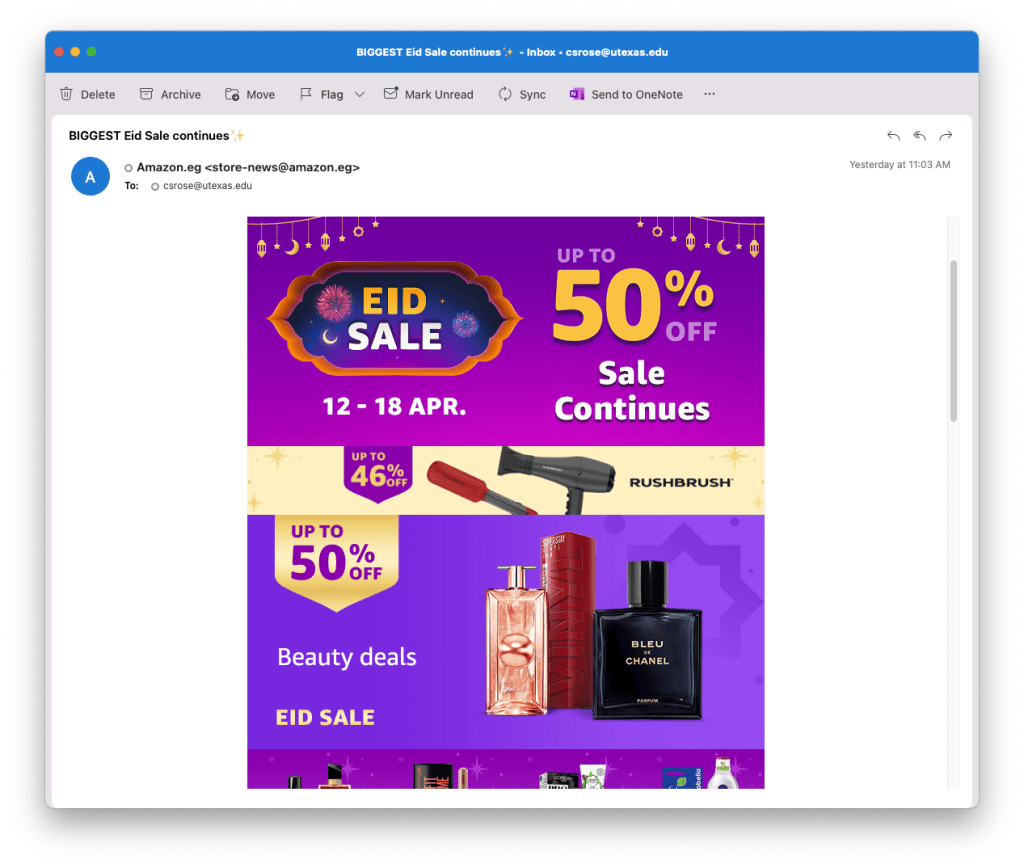
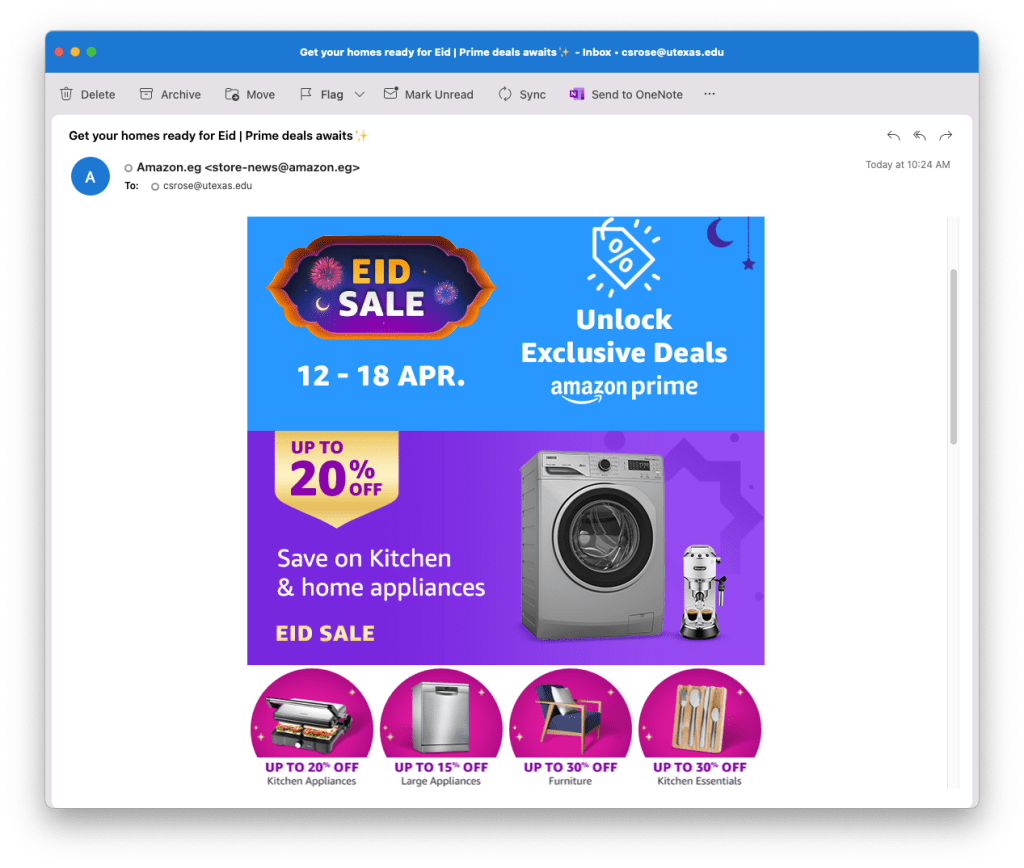
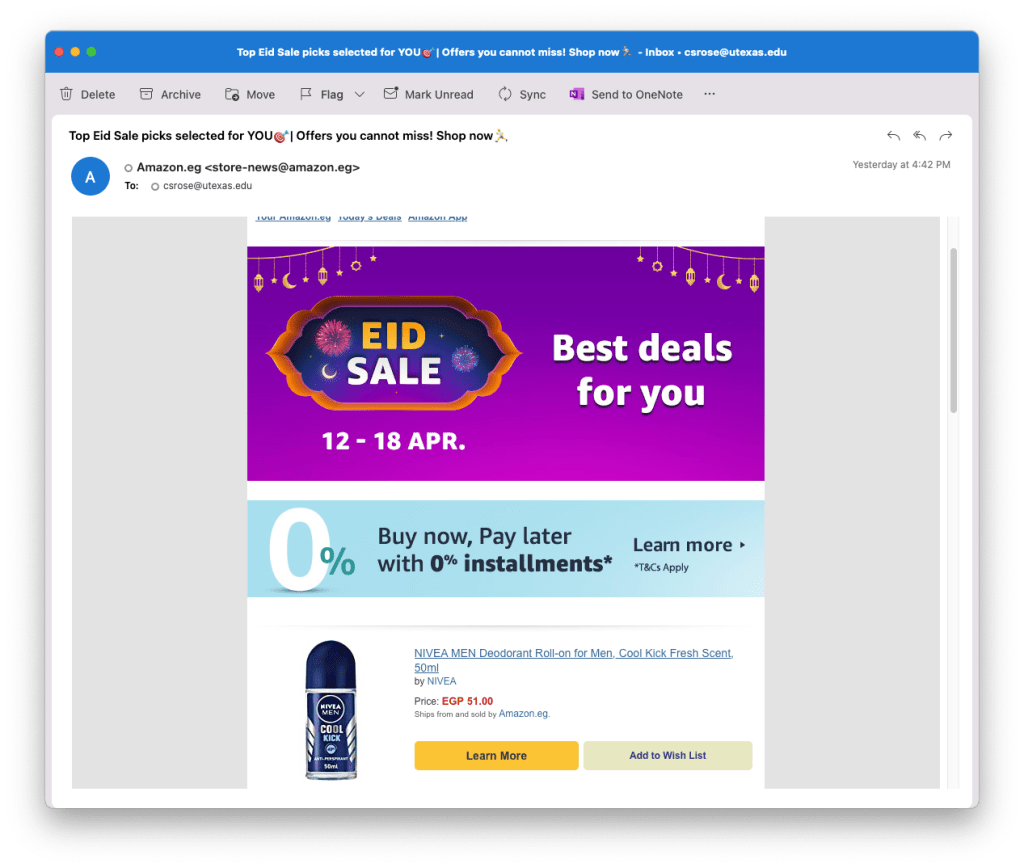
There’s no way to ignore Eid. Look at these ads I got from Amazon:
I’m trying really hard not to read anything into Amazon suggesting that what I need for Eid is a case of deodorant (they also think I need Tide detergent and a jumbo pack of diapers).
So, let’s get into it shall we?
Are there Ramadan decorations like there are Christmas decorations?
One of the things you hear over and over in Egypt is that Ramadan is different here than anywhere else in the Islamic world (I have nothing to compare this to, so maybe they say this everywhere else, too).
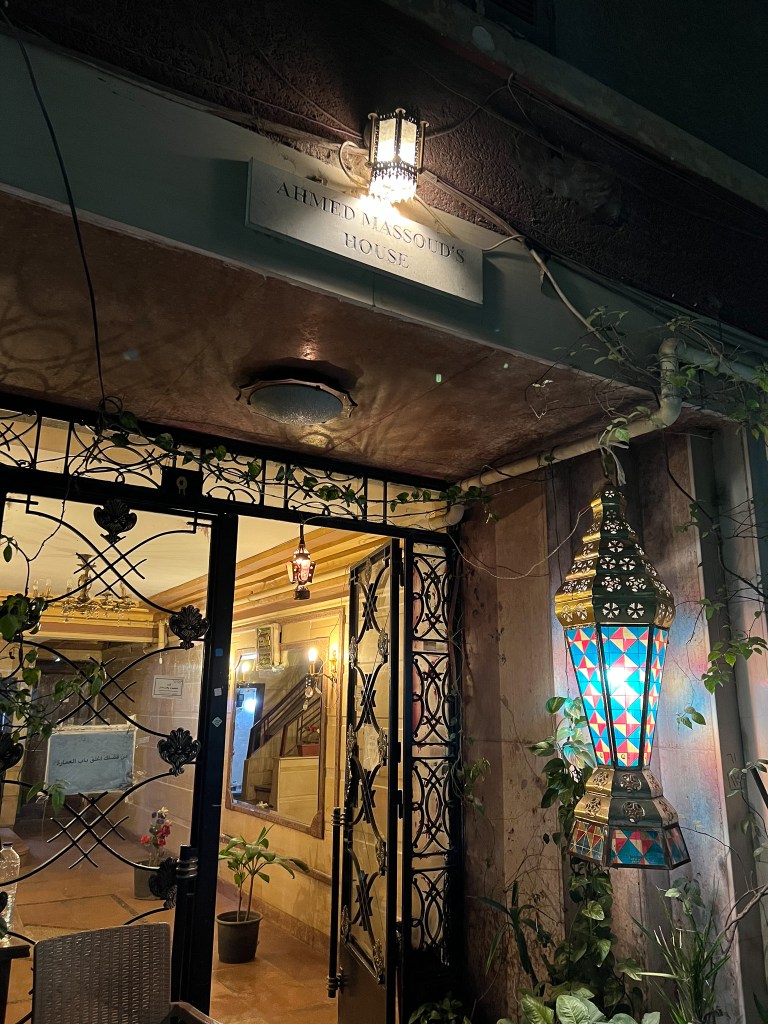
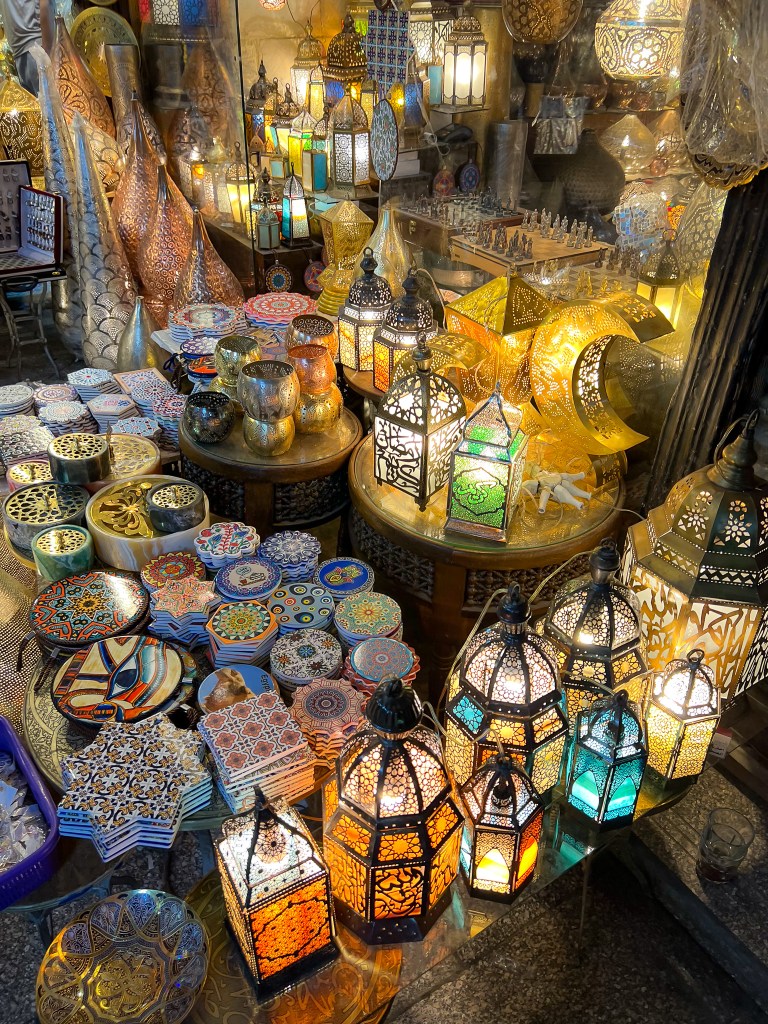
One of the unique things here is that, as Christmas decorations revolve around various permutations of pine trees (Christmas trees, wreathes, etc.), in Egypt decorating for Ramadan revolves around the fannous, or lantern.
In fact, there are more than a few decorations combining the fannous of Ramadan and the candle associated with the Easter vigil — in Orthodox Christianity the big Easter service is very late on Saturday night; churches descend into total darkness, and then at midnight candles are lit to symbolize the resurrection of Jesus. Traditionally it’s supposed to be a “miraculous flame” but the last time I went to one you could hear them trying to get the lighter to work.
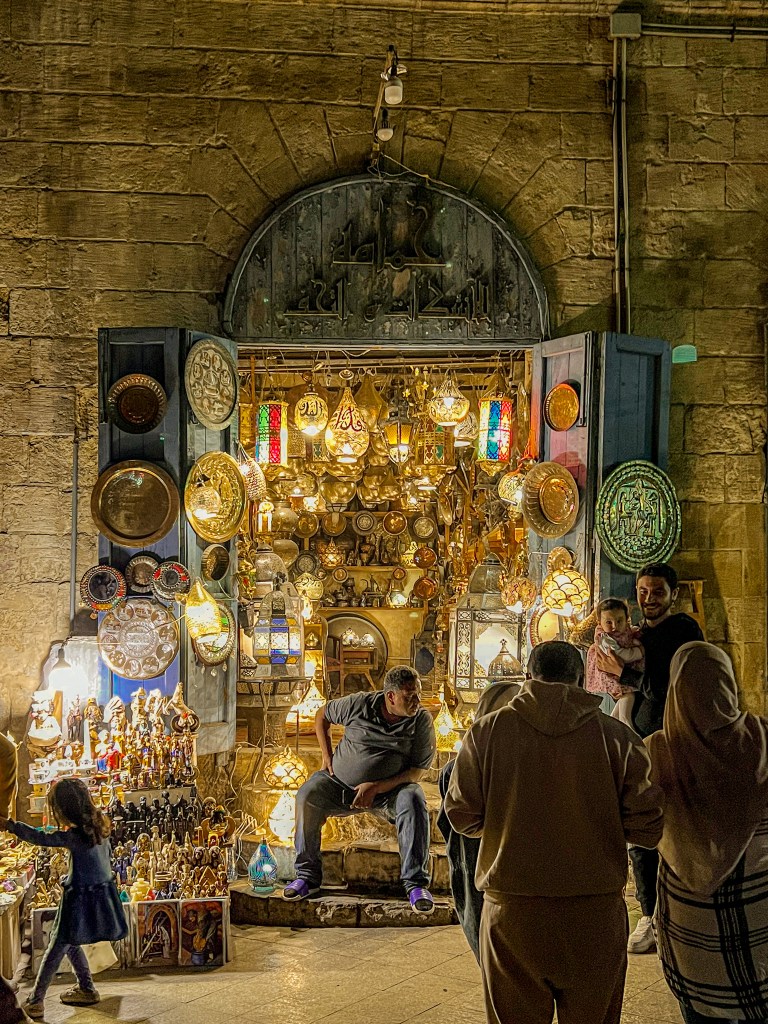
You can find actual lanterns and things that approximate lanterns everywhere, although the best selection is in the area known as Taht al-Rabaa’, in the old city of Cairo between Port Said Street and Bab Zuwayla, and then continuing into the tentmaker’s market, Khan al-Khayamiyya.
How does life change during Ramadan?
I’ll be honest – the first day of Ramadan I really wasn’t sure what to make of things.
26th of July Street in Zamalek at 6 pm on the 1st of Ramadan. This street is normally chaos personified with bumper-to-bumper traffic.
Lots of decorations, but where’s the party??
So, to answer the question: how does life change? Not much happens between, say, 2 pm and sunset (which right now is around 6 pm — Egypt is doing Daylight Saving Time this year for the first time in seven years, but they decided to push the start back until after Ramadan ends).
The collection I’ve been working in closes at 1:30 and there’s another rush hour as most government offices seem to let non-essential personnel go home around then. Most smaller stores close around 3 so that people can go home to prepare for Iftar (breakfast, which, literally, combines the two words “break” and “fast”).
Then, around 8, things open back up again until 2 am (which is when the government decided things need to close down). Then there’s another meal (suhoor) before fasting starts again for the dawn prayer (fajr), which this morning was at 3:57 am; many people then read the Qur’an (it’s tradition to read/recite the entire text over the course of Ramadan, and during the month Anghami — which is the Middle Eastern version of Spotify — has popular reciters and the section of the scripture for that day ready to go).
So, yes, many people do, in fact, stay up all night and then sleep in the afternoon – I’ve been told this is an Egyptian thing but it seems kind of like it would apply everywhere else, too.
This generally means that by midafternoon, there’s a notable energy lag, which is why not a lot happens after about 2 pm.
The third week of Ramadan is the longest. Even as a non-fasting non-Muslim in Egypt, I have noticed this. The first week people are getting into it, the second week people are in the groove. The third week … is long. The fourth week, everyone’s ready for Eid! Hope you made your plane/train/hotel reservations months ago — everyone travels, and I’m kind of looking forward to having Cairo to myself … or as much as one can in a city of 22 million people.
Ramadan food!
I often tell students (and other groups that I work with) that, while the first comparison that most people make is between Ramadan and Lent, there’s a case to be made that it’s really to Christmas. It’s when people see family, everyone gets together, and there’s. so. much. food. I’ve been to a couple of Iftars and walked out staggering beneath the weight of my own bloat every time. Even when you think you’re done eating, someone will come along and inform you that you’re not.
Every family has their own traditions. I can’t even start to generalize. Google “Ramadan recipes.”
In Egypt the quintessential Eid dessert is “Kahk al Eid” (or “Eid Cake”). Currently there are signs everywhere for them – and, yes, you can get them from Amazon (although why would you want to??).
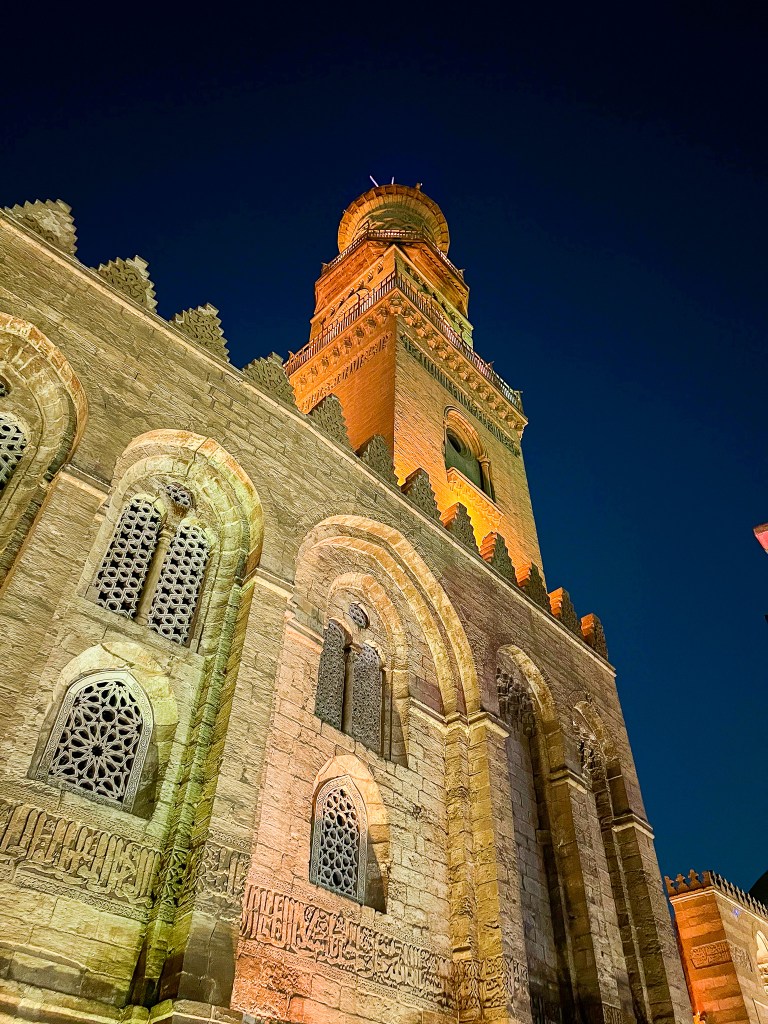
So, a couple of weeks ago I did a photowalk in the Old City at night to see all the Ramadan doings (a photowalk is where a group gets together and wanders around and takes pictures of things). I had been told that if you want to see the “real” Ramadan in Egypt, that’s where to go.
It was noisy. It was crowded. It was on the warm side. And it was incredible.
And just to get a feel for how it was to be there…
There are, of course, many other aspects of Ramadan I didn’t address here, but this has been my experience — so far. If things get wild during Eid, there might even be a part 3!
Also, for the educators out there, my videos are Creative Commons licensed!
It’s been a while since I’ve posted widely; apologies for that. Other than a visit from spouse in which we traveled all over Egypt for two weeks, my life in Cairo has been somewhat routine, with me on a schedule of home –> research –> home –> Arabic class –> home.
In other words, living the dream.
However, I am spending my first Ramadan in Egypt and wanted to spend some time describing what it’s like.
The Basics
What is Ramadan? I’m so glad you asked!
Ramadan is the ninth month of the Islamic calendar (sometimes referred to as the hijri calendar, as it has the prophet Muhammad’s flight–hijra–from Mecca to Medina in 620 as its beginning point, and often abbreviated AH or simply H).
Hijri dates are not fixed in place; the Islamic calendar is a lunar calendar, ten days shorter than the Gregorian calendar (and without leap years), so over the course of a 36 year cycle Ramadan (and the rest of the Islamic holidays) occur ten days earlier every year and wind up back where they started.
This year (2023), Ramadan began in Egypt at sunset on March 22 and will end at sunset on April 20. Dates can shift depending on geographic location because the month begins and ends with the sighting of the new moon.
Ramadan is the holiest month in the Islamic calendar; according to Qur’an 2:185, the prophet Muhammad received the first verse of the Qur’an during Ramadan (known as Laylat al-Qadr, or the night of power, although there is disagreement between the various madhhabs and sects as to exactly which night of the month that is).
Most people are aware that Ramadan is observed by fasting during the daytime: no eating, no drinking (no, not even water), no smoking, no sexual activity. No bad thoughts is also supposed to be on this list, but I’m not sure how that works in combination with the other four (I get cranky without food and am mystified by people who “just forget to eat.”).
“But what if …”
So, since I’m envisioning this post as something of an educational resource, let me acknowledge some familiarity with the ability of students in middle school (and undergraduates) to come up with infinite hypothetical questions and scenarios with which to bombard teachers.
“What if you’re on a spaceship and the sun sets every 90 minutes…” for example (answer: Mission Control usually follows a set time–with NASA it’s Houston time–so you’d just follow that. There have been religious opinions (fatwas) issued to address living in areas where the sun doesn’t really set in the summer — if I recall the most recent one was that Muslims who live in, say, Norway can fast according to the schedule in Mecca, which is much closer to the equator.)
But, in my experience, the answer to the basic question at the heart of most of questions is this:
If fasting is going to harm you, you’re not supposed to do it. Fasting is supposed to be an act of faith, not an act of self-harm.
So, for example, people who don’t have to fast include:
children who are too young to fast
women who are pregnant or menstruating
the elderly
anyone with a medical condition that is incompatible with or would be made worse by fasting (diabetics, people who have medication that must be taken on a regular schedule with food, etc.)
someone who is literally starving to death
travelers are also on this list, although some people exploit this loophole; for a long time it was not uncommon for unscrupulous wealthy folk from other parts of the Middle East to rent out a hotel suite in Cairo for the month so they could claim they were “traveling.” This doesn’t seem to be a thing anymore, although maybe most of them are going to Dubai or Beirut these days.
In Egypt, for example, most restaurants that are open during the day during Ramadan put up curtains or screens or something to allow people to eat with privacy (and to avoid rubbing it in the face of those who are fasting), but it’s not like you’re wandering around a desert with no hope of finding anything to eat. Supermarkets are open normal hours, and cafes may not be as full as usual but they still have customers. There are plenty of tourists, foreign residents, and, in addition to the above, 15% of Egypt’s population of 100+ million is Christian — mind you, the Copts have their own fasting regime for Lent…
It’s really no one’s business if you’re not fasting:
However, all of this emphasis on fasting, especially in, say, American school textbooks, tends to give a pretty dour impression of what Ramadan is all about.
For example, this ad for the South African peri-peri chicken franchise Nando’s shows a young man eagerly waiting for sunset (it looks like it was filmed in Dubai).
The Nando’s advert was notable because, given the realization among companies in majority non-Muslim nations that Muslim families tend to have buying power, there’s been some well intentioned (as in, the stuff the road to Hell is paved with) efforts to try to be more inclusive in advertising, especially in the past few years.
The Nando’s ad is one of the better ones–I have definitely seen people sitting at tables waiting out the last few minutes before breaking the fast, although usually it’s done with soup and a date.
However, some of the American entries this year were a bit cringe, such as this ad (with commentary from the friend who posted it on Instagram):
Oh my. Where to start with this one?
That’s not the hand gesture Muslims make while praying … and normal prayer isn’t done at the table like that either.
It appears to be the middle of the day.
If it’s just mom, dad, and kid, she probably wouldn’t have her hijab on.
And what in the world is on top of their plates?
A for effort, D for delivery.
For the record, the reason for all the hype is that said companies have caught on to the fact that there are other parts of Ramadan. There is lots (and lots, and lots) of food. And, even more notably, Eid al Fitr, which comes at the end of the month, is one of the main gift-giving holidays on the Islamic calendar.
Today’s home page of Amazon Egypt, for example, looks like this:
When Ramadan began … and I do mean, at the exact minute Ramadan began … I got at least 15 texts and notifications from various shopping apps wishing me a blessed month and sending a promotional code. Including one of the beer and wine delivery services (which I realized much, much later was actually a subtle note saying they’d see us when the month was over).
So … what does Ramadan look like?
This post is getting a bit long, so I’ll stop with the basics. In the next installment, I’ll share what it’s been like in Cairo this month!









 Christopher S Rose